Late Night Cravings · Recipe
Tomato-Bacon Pasta
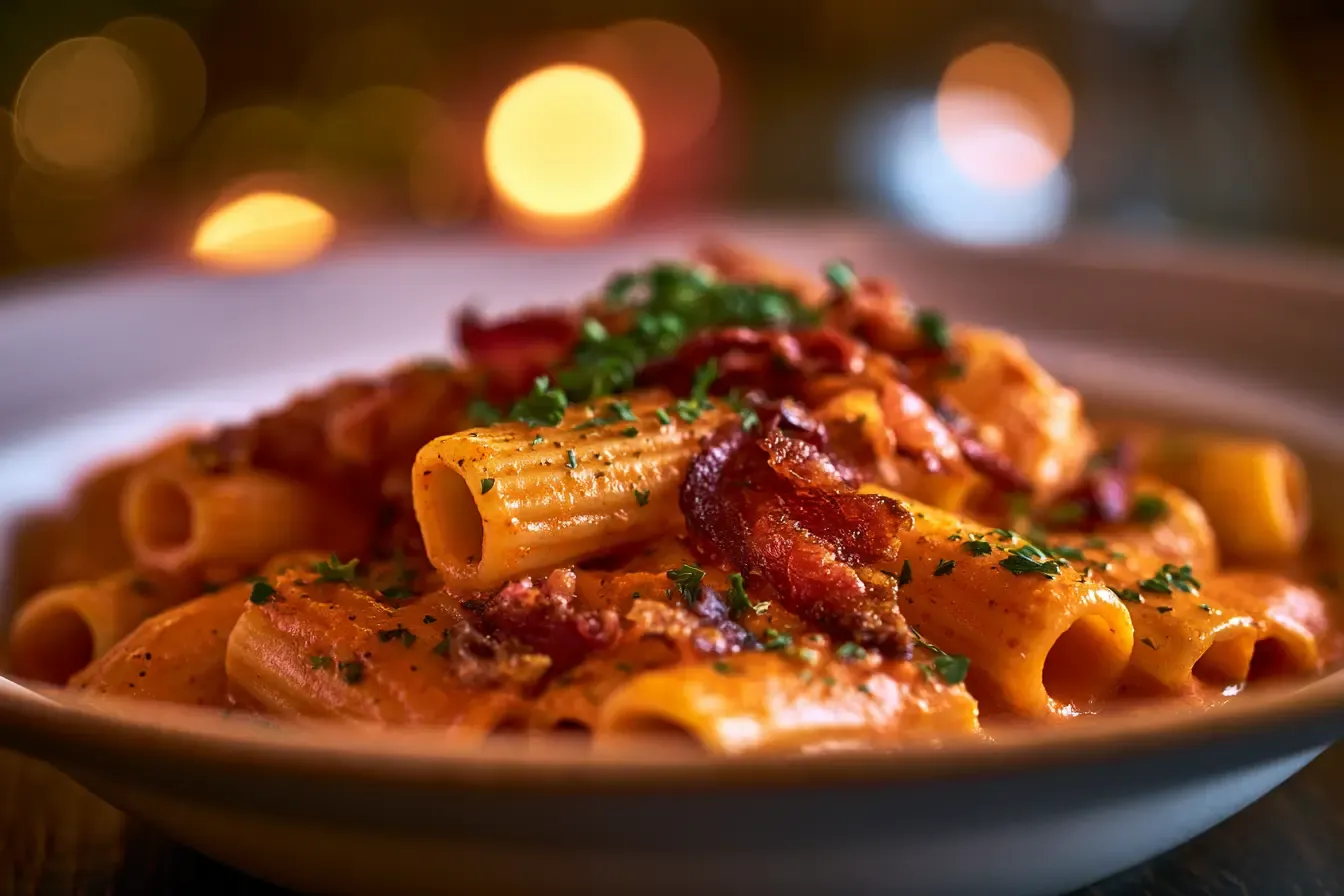
My family always called this tomato-bacon-pasta, and for years I had no idea it was anything else. It was budget-night food: rigatoni, a can of tomato juice, bacon, pepper. Simple, cheap, and — this is the part that mattered — actually delicious.
That last part wasn’t a given in my house. I grew up a supertaster, which is a polite way of saying half the world tasted like too much to me. My mother was the opposite. She smoked enough to sand her tastebuds down to nothing, and she chased food that could punch through all that numbness — sharp, bitter, aggressive stuff I found genuinely revolting. We almost never wanted the same dinner. But this one we did. Whatever else was going on, tomato-bacon-pasta was common ground. It’s one of the few meals I can remember us both just liking, no negotiation.
Here’s the funny part I only worked out as an adult, after I’d picked up a real food background: this isn’t a weird family invention at all. It’s pasta all’amatriciana — one of the four classic Roman pastas. You can trace the whole family tree: cacio e pepe (pecorino and black pepper), then gricia (add cured pork), then amatriciana (add tomato), with carbonara branching off on the egg side. Our version is amatriciana that emigrated and went broke. Guanciale became American bacon. San Marzano tomatoes became a can of Campbell’s. And the finishing pecorino — the signature move — got dropped entirely, which is exactly why it never quite registered as the restaurant dish. We’d been making a centuries-old Roman recipe the whole time without knowing its name.
It tickles me that I grew up in Las Vegas surrounded by Sicilian restaurants, and yet almost every Italian dish I truly love turns out to have Roman roots instead. This one came to me across an ocean and a couple of substitutions and still landed on our table intact.
The recipe below is the grown-up version — the way I make it now. The real upgrade is the starch water: instead of draining and dumping, you reduce a mug of the salty, starchy pasta water until it turns into a thin gel, and that’s what lets the bacon fat and tomato juice cling to the noodle instead of sliding off into a puddle. Same emulsion trick as cacio e pepe. Pepper and herbs get bloomed in the bacon fat so they actually bring something, and the bacon stays crisp on the side so it never goes sad and chewy in the sauce.
But I want to be clear about what’s sacred. The heart of this is still tomato juice, bacon, and pepper — no cheese. I like the purity of straight tomato juice; you can use blended stewed tomatoes if you want more texture, and the Campbell’s-was-unpredictable-in-the-80s lottery of getting a sweet can or a sharp one is part of my memory of it, but the clean version is the one I reach for. And I’ve genuinely never once added the pecorino. The Roman in me knows it would probably make this exceptionally good. But then it wouldn’t be budget night, and it wouldn’t be mine. If you try it that way, leave a comment and tell me what I’ve been missing.
The Ledger · Recipe
Tomato-Bacon Pasta
Ingredients
- 1 lb rigatoni (or ridged medium shells)
- 8–10 oz bacon, cut into 1-inch pieces
- ~2 cups tomato juice
- 1–2 tsp dried Italian herbs
- Lots of coarse black pepper
- Seasoning salt to taste (Tony's, Lawry's)
- Generous salt for the pasta water
- Tiny pinch xanthan gum (optional, for cling)
- Pinch MSG (optional, big umami)
- Grated pecorino romano (optional — makes it the Roman version)
Method
- Salt the water hard and boil the pasta. Bring a pot to a rolling boil and salt it more aggressively than usual. Cook the rigatoni to just shy of al dente — it finishes in the pan. This water becomes the sauce base, so you want it both seasoned and starchy.
- Render the bacon slow. Start the 1-inch pieces in a cold cast iron skillet, bring up to medium, and cook to deep gold and crisp. Pull the bacon to a plate. Pour off all but 1–2 Tbsp of fat — reserve the rest in a jar; saved drippings are a strategic asset for the week.
- Concentrate the starch water. Before draining, dip out a mug of pasta water. Drain the pasta, then keep that reserved water over heat to reduce while you build the sauce. As it boils down it thickens into a thin starch gel — the emulsifier that makes fat and tomato cling instead of pool. This one move is the whole difference from the strained-and-dumped original.
- Bloom the aromatics in the fat. Set the skillet of reserved bacon fat over medium-low. Add the dried herbs and a generous amount of cracked black pepper; sizzle gently 30–60 seconds until fragrant. Piperine and the herb oils are fat-soluble — blooming pulls out far more flavor than they'd give in watery tomato.
- Build the sauce. Splash in some concentrated starch water and scrape up any fond, then pour in the tomato juice. Bring to a gentle simmer. For extra cling without slime, whisk in a tiny pinch of xanthan — a few specks, no more. Season with seasoning salt and more pepper to taste. If the tomato juice reads as a sharp throat burn, stir in a tiny pinch of baking soda; it fizzes for a second as it neutralizes the harshest edge, no sweetness needed.
- Marry and toss. Add the pasta to the pan and toss over medium 1–2 minutes, adding splashes of starch water as needed, until the sauce tightens and coats every piece. The toss is where the emulsion sets onto the noodle — don't rush it, don't drown it.
- Plate; bacon on the side. Serve in bowls with the crisp bacon and a pepper grinder at the table so everyone garnishes their own. Bacon turns chewy the instant it sits in liquid — keeping it out preserves the crunch-against-soft contrast. Want the true Roman version? Off heat, toss in a handful of grated pecorino romano tempered with a splash of starch water.
Comments